Tuesday, April 17, 2007

Raised Beds Are Perfect for the Organic Gardener


There is much to be said for raised beds. For gardener and plant alike a raised bed environment has many benefits.

For the gardener you get to do all your gardening from the garden path without bending over. The plants are at eye level so it’s easier to see pest and disease with the hopes of catching either early on before they do serious damage. On this note it is also easier to see the fruit as well at harvest time. Plus it just looks nice.


Raised bed designs by IP Woody's Creative Woodworks


For the plant there is the added benefit of a loose, custom blended soil and better drainage. Soil compaction is greatly reduced in a raised bed. The soil tends to warm up earlier in the spring and continue to produce latter in the fall. With the work area at a more accessible height weeds are less likely to get ahead of the garden as well. Soil amendment and mulch are more easily applied.

Last but not least raised beds produce more per square foot than ordinary beds.

Raised beds can be as static as long rows 3 – 4 feet wide with pathways wide enough to accommodate a wheelbarrow and worker. Or they can be built in marvelous shapes and put together to create special gardens and private places to hide-away.

While raised beds can be as simple as mounding up the soil, physical borders help maintain the integrity of the sides and allows for easier access.

The sides of a bordered raised bed can be made of many different types of material.
· Rock
· Brick
· Cinder block
· Straw bales
· Railroad ties
· Plastics
· And of course wood. The wood could be redwood or cedar. These woods are naturally resistant to rot.
One of the most important details to consider when building a raised bed is the corners. If not built properly they will not hold the weight of the soil inside the bed.

These easy to build raised beds were the designed by Landscape designer Lisa Van Cleef.


~~~~~~~~~~~~~~~~~~~~~~~~~~~~~~~~~~~~~~~~~~~~~~~~~


One of my favorite places to shop - Gardeners Supply
has many different styles of raised beds to choose from
if you don't have a do-it-yourselfer at home.


Monday, April 02, 2007

Springtime Calls for Gardening Tools and Chores!


Early Spring Gardening Tools and Chores

Spring flowers are beacons of light shining through what's left of the bleak winter landscape.

There’s no way around it, even if you did all your chores last fall, the first jobs to be done in the spring are clean up. So get your garden cart out, your rake, pruning shears and gloves and get to picking up all the trash left behind by mindless, rude human beings, and the ravages of Mother Nature.

Look for dead and damaged plant material. Be merciless when cutting back a plant that has suffered any kind of damage. It will come back stronger than ever.

Make sure any leaves and plant material that are diseased have been cleaned up and discarded properly to avoid recontamination of new growth.

Get out your garden fork and cultivator. Cultivate shallowly where there may be roots close to the surface, use the fork on open ground to break up the soil and allow for air and water to get through. Continued vigilance at this time will also help keep weeds down.

Watch for your early spring bulbs and make plans on where you want to expand and with what for the following fall. Draw diagrams and take notes. Don’t depend on your memory.

You should already be planting seedlings inside now for planting out later. Many hardy greens will thrive in the cooler temps of early spring. They are also quick and easy to germinate and they are fast growing. Prepare a plot for spinach, kales, Asian greens, sorrel, Swiss chard, miner’s lettuce, watercress and arugula. A simple tunnel providing minimal protection for these greens will have you harvesting delectable green salads very early on.


Organic seed list:


  1. Wild Garden Seed

  2. Johnny Select Seeds

  3. Peaceful Valley

Consider the Earth when you garden and keep it Organic!

Christy
Mother Earth’s Farm / VermiCulture Northwest

Friday, March 16, 2007

Time To Fertilize Your Lawn for Spring

Luscious Lawn Fertilizer


icon
icon Click me

Everyone wants to have a lush, green lawn to start off the outdoor season. Do it organically and you can feel good about having your family out there playing on it and how you're effecting the environment. The product above covers all counts.

Tuesday, March 13, 2007

Do You Know Your Why When You Garden Organically?

Farming for the Future


In the rolling foothills of Southeast Ohio exists a movement of small-scale farmers who cultivate without chemicals or major mechanical input. For these visionary men and women of the earth, pesticides are an unnecessary hazard, while one’s own sweat and toil proves more efficient than fossil-fueled machines. Farming for the Future escapes from the grocery store to tromp through the fields with a diverse group of forward-thinking yeomen, illuminating the subtler and oft-forgotten aspects of the vital commodity we call food.

This 15 minute movie is well worth your time. Let it inspire you to make a difference in your corner of the Earth.

Wednesday, March 07, 2007

Organic Lawn Care


Mission Impossible?

Are you thinking of Spring? I know I am. Getting out without layers of clothes and heavy boots. To take in a breath of fresh air that doesn't burn your nose hairs. To look up at the sky and see blue. And to look at the ground and see GREEN!

There is something so uplifting and refreshing about the new growth of the Spring lawn. It speaks of a renewed life and a new beginning. We have not yet stopped to think of all the work involved in keeping it that way. Only that the expanse of the lush green growth lures us to be out on it after the long indoor season that is winter. We become possessed with the vision of a lush, green, "weed free" lawn. We will do whatever it takes... Will you? Even if it means creating a toxic experience for your family and pets? I hope not, because...


There is nothing like the feel cool blades of grass on your bare feet.


The soft cushion of a bed of grass beneath you.


Being that close to the earth is rejuvenating. It makes you feel alive inside, like a young child again.


Can life possibly get any better than this? Only when you know the grass is safe.

Well you can go ahead and play your games, send the kids out to play in the sprinkler. Because you'll be happy to know that there is an alternative to chemicals for the lawn. That you can go ahead and extend your "family room" to your lawn and know your family is safe to enjoy all their outdoor activities.

NaturaLawn of America is the lawn care industry’s recognized leader in organic-based lawn care services, and uses an eco-friendly approach to create a green lawn quickly, more naturally, and with fewer weeds. Their system relies on organic-based products, which promote healthy lawns that are safer for humans, animals, and the environment. NaturaLawn of America has been able to reduce weed and insect controls by over 85% year after year compared to the traditional chemical lawn care companies.

If NaturaLawn of America can do it then you and your lawn care company can too. Insist on it, for your family and pets.

You can do it and feel good about it! Do it yourself and save...

A Beautiful Lawn and Garden Most People Only Dream About! Your Lawn and Garden Will Be the Envy Of The Neighborhood- But Not At The Expense Of Your Children and Pet's Health... Save Time And Money" NO TOXIC CHEMICALS! Lawns Without Those Annoying Yellow Spots... Greener Lawns In Water Restricted Areas... Kill Ants and The Entire Colony, In Your Lawn And Garden Where They Live, In Less Than 3 Days!

Click here to discover how you can do it!

Here's to Spring in your neck of the woods.

Christy
Mother Earth's Farm

Wednesday, February 28, 2007

Gardening Action

Spring is time for ACTION!


Starting early will help you stay ahead of pest and disease problems.

Wouldn't it be great if you could avoid all the pest and disease problems this summer that you have struggled with in the past? To be able to skip the sprays and dusts and the potentially hazardous exposure to your family and pets? Well you can reduce if not eliminate these problems, and now's the time—when you're prepping and planting—to make it happen.
====================================================
Start Healthy

Healthy plants resist infestation, but a sickly, stressed plant will be an open invitation to pests and disease. As a gardener, your job is to provide ideal growing conditions, so the plants in your garden grow strong.
Organic gardeners know that the time to add soil enhancing organic amendments is in the Fall. This allows ol' man winter the opportunity to break down and release the essential ingredients needed for a healthy soil. If you weren't able to get your amendments added in the fall, consider trying to get a good early cover crop in. Or find a good quality compost with an organic fertilizer for your spring amendment.Take the time to loosen the soil with a garden fork down to about 12 inches deep. Doing this will open up channels for air and moisture, and make it much easier for roots to penetrate the soil. ========================================================
Healthy Starts


Begin with your own healthy seedlings or buy strong starts. Don't skimp on this early expenditure. Buying plants that are on sale because they have been on the shelf too long, or are leggy and leafless saves you nothing and costs you in the long term. The plants will take your valuable time and resources and then under-produce, or worse yet not produce at all.


========================================================
Provide Protection

Whether you grow your own starts or buy transplants for your garden they will need protection from the elements. A period of hardening off, where the plant is set outside in a sheltered area for a few hours everyday, followed by cover from the harsher outdoor conditions once it is transplanted, will be needed. The young plant will need a few days to get its' roots established and will require steadfast protection. Stressing the plant at this stage will weaken it and leave the door open for pests and disease.


======================================================
Devine Diversity


By planting a wide variety of plants in your garden you discourage any onslaught of any one particular pest. Many plants attract beneficial insects and predators of pest such as birds. By adding a small patch of marigolds here and there with a sprinkling of alyssum, dill or fennel you will be attracting beneficials as well as giving yourself a treat. Many of the plants that are considered weeds in many gardens are actually much needed food sources for attracting the main warriors in your fight against pests. Keeping a small patch of naturally occurring native plants will help maintain a healthy balance in your garden.


=====================================================
Some Beneficial Insects That Help Control Noxious Pests

Ladybugs

Every gardener has heard of the darling little ladybug, which is renown as a voracious eater of many garden pests. Ladybugs and their larvae feed upon aphids, mealybugs, spider mites, scales, whiteflies, and many other smaller insects. They prefer aphids as their primary delicacy, but also eat the eggs of other insects, which is a real boon to gardeners. After an adult female's eggs hatch, their larvae alone will readily consume literally hundreds of aphids.

Green Lacewings

Lacewings serve as beneficial predators either as eggs, larvae, or adults. Their larvae will eat large numbers and many varieties of aphids, and also devour mealybugs, whiteflies, thrips, leafhoppers, red spidermites, and a variety of other soft-bodied noxious insects.

Dragonflies and Damselflies

These two beneficial insects are also a great aid to gardeners, as they catch and eat flies, termites, beetles, mosquitoes, and other noxious flying pests. Research indicates that dragonflies can zoom through the air at about 60 miles per hour while catching and eating their lunch along the way! Damselflies are not as large as dragonflies, neither can they fly as fast. However, they are also superb beneficial insects to have in your garden, as they also feed on many garden pests.

Predator Mites

There are several species of mites that feed on spider mites and sometimes will feed on thrips. These predator mites will not damage your plants as do the spider mites.

Scale Parasites

A very small parasitic wasp (Aphytis melinus) is another beneficial insect that will help keep your garden healthy. This little wasp attacks and destroys red scale as well as other types of scale on plants. As with any type of wasp, bee, or yellow jacket, please exercise care to avoid getting stung!

There are many other beneficial insects that can be introduced to your garden to help control common garden pests. These mentioned here are only a few of the most bothersome to gardeners, and will give you a starting point. If you need help identifying or controlling any of your garden insects, either beneficial or nonbeneficial, there are many excellent resources available. One very outstanding organization known as CSREES, Cooperative State Research, Education, and Extension Service, is a dynamic new international research and education network. The services of CSREES expands the research and higher educational functions of the former Cooperative State Research Service. This agency offers a wealth of information to not only gardeners but also the entire agricultural community.
===================================================
A few tips to attract beneficial insects to your backyard

The needs of beneficial insects are not difficult to meet if you have a real desire to lure them to your garden. Many, if not all, probably already exist in your garden. Here is a short checklist that outlines their needs.

Food

Beneficial insects will be happy with early blooming plants that contain nectar and pollen they can feed on. Some early bloomers they are attracted to include pansies, alyssum, Queen Anne's Lace, and fennel. Later in the season there are many others such as coneflowers, cosmos, goldenrods, or lavender that they will enjoy.

Water
Water is essential for all insects and is easy to provide. Any type of container that will hold water can be placed in an inconspicuous place in your garden. It can be kept filled with water as you sprinkle your flowers, or you can also just let rain and dew collect in it. Just be sure there is always some water in it.

Shelter and a place to rear young

Try leaving some leaves or other debris under some of your larger shrubs as a place of shelter for beneficial insects. Or, place a dead log or some rocks and brush in one corner of your garden to provide a place of protection for them during cold or inclement weather. Like your butterflies, beneficial insects are cold-blooded and don't like cold, windy weather. They like a nice cozy place to hide until the sun comes out again. These sheltered places will also serve as a great place for them to raise their youngsters!

Avoid pesticides!

Select only organic or other natural insect control substances in addition to your beneficial insects if your garden should develop a serious infestation of harmful pests. If you really MUST resort to pesticides, try to select those that are the least toxic and use them sparingly. Otherwise, you will surely risk killing your beneficial insects — AND your butterflies and hummers as well!
Click here for a full version of this Market Monthly News newsletter.
Christy

Tuesday, January 30, 2007

Growing with Heirlooms

  • In gardening and agriculture, an heirloom plant is an open-pollinated cultivar that was commonly grown long ago, but has been largely supplanted in modern times by hybrid seed.


    Vegetables and fruits that have been grown for decades and passed down from generation to generation have come to be known as Heirlooms or heirloom varieties.
    Some experts say that a seed needs to be a least 50 years old to be considered an heirloom. Others believe a seed can not be called an Heirloom unless it is 100 years old or more.
    Heirloom plants open-pollinate, which means they are able to reproduce themselves through their seeds, unlike hybrids, which will not yield the same plant from a seed grown from their fruit.
    Heirlooms are evolution at its best, as gardeners saved the seeds of their best-tasting and most healthy plants to plant in next year’s garden, allowing the plant to adapt to the region, micro-climate, and pests.
    Without the diversity of heirloom plants, with their unique evolutionary characteristics and resistances to diseases and pests, today’s crops—which rely on these varieties to breed resistance into modern crops—are at risk for infestations and epidemics.
      The movement to preserve heirloom cultivars has been with us since the 1970s, with non-profit organizations, university agricultural programs and seed manufacturers, as well as small-scale farmers and home gardeners, recognizing the value of keeping a little piece of our heritage alive through cultivating heirloom seeds.
      It may prove difficult to find Heirloom varieties in your local grocer or farmers' market. And if you do you will probably pay more as it is more difficult to grow and ship these products commercially. But to grow these precious commodities in our own gardens, while they might prove more challenging, is worth the effort. The hybrids, while widely available, have been bred for certain characteristics at the expense of many of the desirable attributes of the heirloom.
      I encourage you to try your hand at growing heirlooms, and start your own tradition of seed saving to pass on down to your own future generation of gardeners.
      To your 2007 garden,

      Sunday, January 28, 2007

      Getting a Head Start on the Garden


      Starting early when you live up North is sometimes the only answer to getting a good harvest.

      When you work so hard all season weeding, watering, feeding and staying on the look out for pests and disease, how disheartening is it for you to only get a handful of produce for your efforts?

      Put a little more effort into getting an early start and your efforts will be rewarded many times over.

      MML Brand


      The gardening season is just around the corner and the best way to get a
      jump on the season

      is to start indoors. Get those seeds started while Ol' Man Winter
      is still raging and you'll be

      way ahead of the pack.

      Gardener's Supply Company - Free Shipping on orders of $55 or more >>

      Rev your engines for a speedy start on the gardening season.

      You can get some of your best Organic supplies right here!


      For all the extras that you won't find on my site, I love to shop at Gardener's Supply. And with free shipping on orders of $55 or more, you just can't beat that.

      My newsletter, Market Monthly News is just about ready to start this years publication. I will be sharing with you, step by step what I do to get an early start and achieve success in my garden. Go here to subscribe.

      The catalogs are coming in. If they aren't coming for you please send me a message via my form here on this blog and I will share resources with you to help you get some of the best catalogs available for organic sources for seeds and supplies.

      May the sun shine bright on your gardens,

      Christy
      MotherEarth'sFarm.com


      Tuesday, January 16, 2007

      Update on Organic Pesticides

      Wow, I just got an email from one of my very favorite places to shop for gardening supplies. I have been shopping with this catalog garden supplier ever since I got serious with my gardening, and especially serious about organic gardening.


      Remember my post, just a couple posts ago about Pharm Pesticides. Well, my favorite place to shop just sent me an email about these products. It read like this:


      Easy Organics: No Mixing & No Mess!


      And guess what they were talking about? That's right!

      icon
      icon

      icon

      If Gardener's Supply
      is selling this in their catalog,
      it's been tried and tested.
      And it works!

      Now I haven't had the chance to give this stuff a try, because right now we're in the middle of winter, and there's no gardening going on right now. We're just trying to stay warm, me and the worms. But you can be sure, with the first bud swell outside, I'll be ordering some.

      Click the pic and let me know what you think.

      And Happy Organic
      Gardening!

      Christy
      Mother Earth's Farm / VermiCulture Northwest

      Thursday, January 04, 2007

      The Proof is in the Banana!

      In 1992, the Rainforest Alliance sent Chiquita a list of demands - Stop poisoning the environment and the banana farmers with the use of chemical pesticides, herbicides and fertilizers.

      Dave McLaughlin, general manager of Chiquita's Costa Rican branch, decided to listen. He started by cultivating only two plantations using environmentally friendly methods. The experiment ended up being so successful, Chiquita implemented the changes company-wide. The company spent $20 million to introduce less-toxic pesticides, recycle all plastic bags, improve the working conditions for the farmers and build homes and schools for employees.

      The results speak for themselves. It is now more than 10 years later, and all 110 Chiquita plantations in South america have the Rainforest Alliance stamp of approval. What's more, Chiquita is saving a staggering $5 million a year on pesticides and production has increased 27 percent. Source: ODE Magazine (Dec. 2006)

      Organic methods do work. And if you understand the biology of organic, if you educate yourself about the health of your soil, you will understand the why and the how.


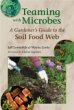
      Click on this book and buy it! It is your key to understanding the how and why of the health of your soil.

      Chemicals kill the health of your soil. Organic is about more than just not using chemical pesticides, herbicides, and fertilizers. It's about replenishing and re-establishing a healthy soil food web.

      ******************************************************************************

      Organic bananas are one of the more affordable organic products available. I feel good about feeding them to my son.

      This healthy young man is my son, Keven.

      And I feel the same when I serve the nutritious, organic food I grow in my own garden. Not only because I am doing good for my family, but I'm also doing good for their environment.

      Respect your soil,

      Christy
      MotherEarth'sFarm / VermiCultureNorthwest
      Where good things come from for the body and soil.

      Sunday, December 24, 2006

      Organic Pesticides Certified USDA-Compliant


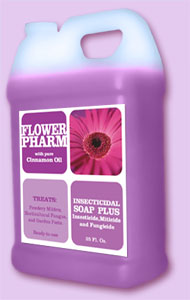
      A family of organic growers has developed the world's first and only pesticides certified as USDA-compliant with national organic regulations. This company's products are said to combat mildews, molds, rusts and blackspot, over-wintering eggs and larvae.

      Here is the classic case of a need being filled. As more and more organic farmers, gardeners, and consumers ask for...no, demand organic alternatives to meet their needs, someone will step up to the plate and fill it.

      So let your voice be heard for more organic alternatives in all aspects of our lives. We don't have to settle for poisoning ourselves, our children, and our environment.

      Check it out at: Pharm Solutions Inc.

      Happy Holidays and an Organic 2007!

      Christy
      MotherEarth'sFarm

      Friday, October 13, 2006

      Organic Landscaping

      Because there is such an increasing need for information about organic landscaping and lawn care practices, the Organic Landscape Alliance (OLA) has a new website, providing the public with a credible source of information on organic lawn and landscaping practices. The non-profit trade organization’s website www.organiclandscape.org includes fact sheets on organic lawn care and landscaping...

      Atlantic Canadian Organic Regional Network (ACORN) has developed a new on-line “gardener’s tool.” The Grower’s Database is a free to access and lists the top 100 pests and weeds. Within the database, are pictures of the various growth stages to help with identification, as well as information on the life and growth cycle, damage caused, prevention options and treatments – all without the use of chemical pesticides and herbicides. Just go to www.acornorganic.org and select “Grower’s Database.”

      There really is no excuse for ignorance when it comes to organic solutions for gardening and landscaping.

      Happy Gardening!

      Christy

      Sunday, August 27, 2006

      Organic Pest Control


      Pest control is one of the places where organic gardening can actually be superior to chemical methods. Instead of using harsh pesticides to get rid of garden pests, it is often better and more effective to use beneficial insects to get rid of harmful ones. Harmful insects are often unable to compete once more beneficial insects have been brought in to the organic garden.One of the most common pests encountered by gardeners, and one of the biggest reasons they use chemical pesticides, is aphids. These common garden pests can be organically controlled by spraying the infested stems, leaves and buds with a diluted mixture of soapy water, then an application of fresh, clear water. This technique has been used by organic gardeners for many years, and it is effective even against heavy infections of aphids. By using organic methods you are not killing the beneficial insects as well, thereby leaving the beneficials to populate your yard and return year after year.

      If you garden organically your yard will naturally attract the predators you need to take care of the pests you have.

      If you use chemicals you will kill everything and will have to continue to use chemicals over and over. It becomes a never ending cycle of potential harm to you, your family, your pets, and the environment.

      The earth can take care of itself if you let it. Where there is pest there is predator.

      Happy gardening, organically!

      Christy
      Mother Earth's Farm

      Sunday, August 20, 2006

      If a healthy soil is full of death, it is also full of life:
      worms, fungi, microorganisms of all kinds ...
      Given only the health of the soil,
      nothing that dies is dead for very long.
      - Wendell Berry, The Unsettling of America, 1977
      *******************************************
      "Teaming With Microbes: A Gardener's Guide to the Soil Food Web"

      Sometimes scientists can talk over the layman's head and not even realize that the message is not being conveyed. This book is written in a very understandable language, that even a simple worm farmer like myself could understand and relate to. A must read for anyone who wants to learn more about the life producing your food.

      Smart gardeners understand that soil is alive and what is in the soil is what supports plant life. Healthy soil is exploding with life - beyond the worms and insects we can see with the naked eye - there are a multitude of bacteria, fungi, and other microbial forms of life vital to the soil food web that sustains healthy plant life. Resorting to chemicals destroys this delicate balance and results in an unhealthy situation for the soil, the plants, and the environment. You can't destroy this balance and not have an affect on the people, the children, family and friends. As gardeners, farmers, and inhabitants of the Earth we have an obligation to the next generation to leave behind a healthy soil. Venture beyond your current understanding that good soil grows healthy plants and understand why...

      This book is newly available and can be purchased by clicking on the buy from Amazon.com link above.

      Learn the why and strengthen your resolve to garden organically.

      Garden for your health and the health of the earth.

      Christy

      Sunday, July 09, 2006

      Summer Squash Sensation


      Summer squash comes in many popular varieties, the most common being -

      Zucchini: Probably the most familiar to home gardeners (and their neighbors).

      Crookneck: Traditional yellow squash with slender, bent necks.

      Straight-neck: Cylindrical yellow squash, typically smoother and more uniform than crooknecks, with a straighter neck.

      Patty pan: Also known as scalloped squash because of the scalloped edges, these squash are round and flat.

      Each type has different textures, flavors and growing habits. Experiment to find the one just right for you.

      Squash Blossoms

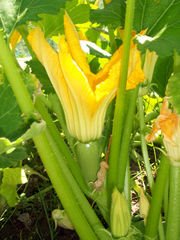
      Summer squash produce both male and female blossoms with only the female blossoms producing fruit.

      Squash blossoms are edible flowers, and are quite a delicacy. Both summer and winter squash blossoms can be battered and fired in a little oil for wonderful taste sensation.

      The male blossoms are best for harvesting unless your goal is to reduce production, or you can harvest the small fruit with the blossom still attached.

      Growing Tips

      Summer squash have roots that don't like to be disturbed. You could sprout your seeds in a peat pot that you can then bury pot and all. Make sure all of the pot is buried under the soil or cut the top portion of the pot off. If a portion of the pot is left to stick up into the air it will act as a wick and suck the moisture right out of the soil right where your roots are.
      Squash like to have the soil evenly moist and with their shallow root system the will do well with a quality organic mulch.

      Because squash grow so quickly and prolifically, it's easy to let the fruit get oversized. If this happens, unless you plan on stuffing and baking it, then throw it on the mulch pile. The worms will thank you. They should be harvested when small and tender for best quality. Most elongated varieties are picked when they are 2 inches or less in diameter and 6 to 8 inches long. Patty Pan types are harvested when they are 3 to 4 inches in diameter. Slightly larger fruit may be salvaged by hollowing out and using them for stuffing. These larger fruits may also be grated for baking in breads and other items. Check your plants every 1 to 2 days for perfect sized fruit.

      For squash blossom recipes click here.

      Happy gardening, reward yourself.

      Christy

      Thursday, June 08, 2006

      COLD FRAME A HOT ITEM TO HELP YOU GET STARTED EARLY AND STAY LATE

      Ahh...The days are getting longer and warmer, but be careful with those tender young seedlings. Cold nights can set your warm weather varieties back and they may not recover. A cold frame is a simple way to stretch the season out on both ends.


      It can be used to harden off seedlings before they are transplanted out into the garden, store nursery bought plants until it is warm enough to plant out, or it can be planted directly with early or late crops of salad greens, spinach, or a warm weather plant such as tomato or peppers.
      A cold frame is simply a specified area that can be enclosed with a material that lets light in and helps keep the temperature of the enclosed area warm and protected.

      This can be done by surrounding the area with bales of hay or straw, cinder blocks, or a wooden framed box (without a bottom or lid).

      The lid can be made from salvaged windows, fiberglass, or plastic sheeting. Be creative and see what you might have sitting around you can use.

      The finished size will be determined by the material you use, but the ideal size is between 2-by4 feet and 3-by-6 feet. which allows you to reach to the back of the bed without stepping into it. The back should be 6-12" higher than the front to allow the maximum amount of light in and rain and snow to drain off easily.

      Place the cold frame in the full sun with the slanted side facing the south to catch all the warming sun as possible. Protect from the wind as cold winds can suck the heat out of the box quickly. Make sure water drains away from the box.

      The trickiest part of a cold frame is managing the internal temperature. On a sunny day the temperature inside can rise quickly even though the outside temperature is still frigid. Ideally, the temperature inside should stay below 75 degrees for summer crops and 60 for cool-season crops. The rule of thumb is to open the lid of the box 6 inches once the daytime temperature reaches 40 degrees and open it completely if the temperature is over 50 degrees. Be sure and close it down in the late afternoon to trap heat in for the night. If temperatures are going to be into the low 20s, cover the lid with straw, insulation board, a tarp or blanket to help trap the heat. Remove it in the morning.

      As you can see by my pictures there are many ways that you can protect your investment of time and money from the ravages of Mother Nature.

      Happy Gardening,

      Christy
      See my newsletter at KootenaiCountyFarmersMarket.com for more gardening tips.

      Wednesday, May 03, 2006

      Organic Success | Battle of the Slugs


      The cool wet weather of Spring is like a wake up call for the Slugs.
      They arrive in the garden in early spring and stay till fall. They can grow to be six inches or more and can live five years or more. They are gray, black, yellow or brown in color.

      They have 27,000 little shredding teeth that can decimate a young row of seedlings in a night. They can actually eat twice their weight once the sun goes down.

      Slugs have a sense of smell and use it to locate a meal. They secrete mucus from their "foot", leaving behind the tell tale slimey trail.

      DAMAGE
      Snails and slugs feed on a variety of living plants as well as on decaying plant matter. On plants they chew irregular holes with smooth edges in leaves and flowers and can clip succulent plant parts. They can also chew fruit and young plant bark. Because they prefer succulent foliage or flowers, they are primarily pests of seedlings and herbaceous plants, but they are also serious pests of ripening fruits, such as strawberries, artichokes, and tomatoes, that are close to the ground. However, they will also feed on foliage and fruit of some trees; citrus are especially susceptible to damage. Look for the silvery mucous trails to confirm damage was caused by slugs or snails and not earwigs, caterpillars, or other chewing insects.

      MANAGEMENT
      A good snail and slug management program relies on a combination of methods. The first step is to eliminate, to the extent possible, all places where snails or slugs can hide during the day. Boards, stones, debris, weedy areas around tree trunks, leafy branches growing close to the ground, and dense ground covers such as ivy are ideal sheltering spots. There will be shelters that are not possible to eliminate—e.g., low ledges on fences, the undersides of wooden decks, and water meter boxes. Make a regular practice of trapping and removing snails and slugs in these areas. Also, locate vegetable gardens or susceptible plants as far away as possible from these areas. Reducing hiding places allows fewer snails and slugs to survive. The survivors congregate in the remaining shelters, where they can more easily be located and removed. Switching from sprinkler irrigation to drip irrigation will reduce humidity and moist surfaces, making the habitat less favorable for these pests. Choose snail-proof plants for areas where snails and slugs are dense. Copper barriers can be useful for protecting especially susceptible plants. Though baits can be part of a management program for snails and slugs, by themselves they don’t provide adequate control in gardens that contain plenty of shelter, food, and moisture.

      Choice of plant can greatly affect how difficult your battle with snails and slugs will be. Snails and slugs favor seedlings and plants with succulent foliage and these plants must be vigilantly protected. Some plants that are seriously damaged include basil, beans, cabbage, dahlia, delphinium, hosta, lettuce, marigolds, strawberries, and many vegetable plants. On the other hand, many plants resist damage from snails and slugs including begonias, California poppy, fuchias, geraniums, impatiens, lantana, nasturtiums, and purple robe cup flower, and many plants with stiff leaves and highly scented foliage like lavender, rosemary, and sage. Most ornamental woody plants and ornamental grasses are also not seriously affected. If you design your landscape using plants like these, you are likely to have very limited damage from snails and slugs.

      HANDPICKING
      Handpicking can be very effective if done thoroughly on a regular basis. At first it should be done daily. After the population has noticeably declined, a weekly handpicking may be sufficient. To draw out snails, water the infested area in the late afternoon. After dark, search them out using a flashlight, pick them up (rubber gloves are handy when slugs are involved), place them in a plastic bag, and dispose of them in the trash; or they can be put in a bucket with soapy water and then disposed of in your compost pile. Alternatively, captured snails and slugs can be crushed and left in the garden. Household ammonia diluted to a 5 to 10% solution in water can also be sprayed on collected slugs to kill them.

      TRAPS
      Snails and slugs can be trapped under boards or flower pots positioned throughout the garden and landscape. Inverted melon rinds make good traps. You can make traps from 12" x 15" boards (or any easy-to-handle size) raised off the ground by 1-inch runners. The runners make it easy for the pests to crawl underneath. Scrape off the accumulated snails and slugs daily and destroy them. Crushing is the most common method of destruction. Do not use salt to destroy snails and slugs; it will increase soil salinity.

      Beer-baited traps have been used to trap and drown slugs and snails; however, they are not very effective for the labor involved. Beer traps attract slugs and snails within an area of only a few feet, and must be refilled every few days to keep the level deep enough to drown the mollusks. Traps are buried at ground level, so the mollusks easily fall into them. It is the fermented product that attracts them and a sugar-water and yeast mixture can be used in place of beer. Traps must have deep, vertical sides to keep the snails and slugs from crawling out and a top to reduce evaporation. Snail and slug traps can also be purchased at garden supply stores.

      BARRIERS
      Several types of barriers will keep snails and slugs out of planting beds. The easiest to maintain are those made with copper flashing and screen. Copper barriers are effective because it is thought that the copper reacts with the slime that the snail or slug secretes, causing a flow of electricity. Vertical copper screens can be erected around planting beds. The screen should be 6 inches tall and buried several inches below the soil to prevent slugs from crawling through the soil beneath the barrier.


      Copper foil (for example, Snail-Barr) can be wrapped around planting boxes, headers, or trunks to repel snails for several years. When banding trunks, wrap the copper foil around the trunk, tab side down, and cut it to allow an 8-inch overlap. Attach one end or the middle of the band to the trunk with one staple oriented parallel to the trunk. Overlap and fasten the ends with one or two large paper clips to allow the copper band to slide as the trunk grows. Bend the tabs out at a 90° angle from the trunk. The bands need to be cleaned occasionally with a vinegar solution. When using copper bands on planter boxes, be sure the soil within the boxes is snail-free before applying bands. If it is not, handpick the snails and slugs from the soil after applying the band until the box is free of these pests.

      Instead of copper bands, Bordeaux mixture (a copper sulfate and hydrated lime mixture) or copper sulfate alone can be brushed on trunks to repel snails. One treatment should last about a year. Adding a commercial spreader or white latex paint may increase the persistence of Bordeaux mixture through two seasons. Barriers of dry ashes or diatomaceous earth, heaped in a band 1 inch high and 3 inches wide around the garden, have also been shown to be effective. However, these barriers lose their effectiveness after becoming damp and are therefore difficult to maintain and not very useful in most garden situations.

      NATURAL ENEMIES
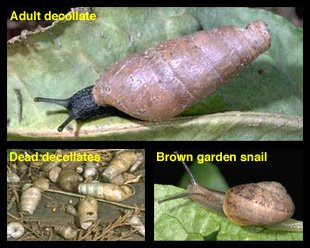
      Snails and slugs have many natural enemies, including ground beetles, pathogens, snakes, toads, turtles, and birds, but most are rarely effective enough to provide satisfactory control in the garden. An exception is the use of domesticated fowl—ducks, geese, or chickens—kept penned in infested areas. (Be careful, though, as these birds may also eat seedlings.) The predaceous decollate snail (Rumina decollata) has been released in southern California citrus orchards for control of the brown garden snail and is providing very effective biological control. It feeds only on small snails, not full-sized ones. Also, decollate snails may feed on seedlings, small plants, and flowers as well as be a nuisance when they cover the back patio on a misty day. Decollate snails will be killed by snail baits.

      BAITS
      Snail and slug baits can be effective when used properly in conjunction with a cultural program incorporating the other methods discussed above. However, baits alone will not effectively control snails or slugs. Several types of snail and slug bait products are available. Baits containing the active ingredient metaldehyde are most common. Of course the most common are generally the most dangerous. Metaldehyde baits are particularly poisonous to dogs and cats, and the pelleted form is especially attractive to dogs. Metaldehyde snail baits should not be used where children and pets cannot be kept away from them. Some metaldehyde products are formulated with carbaryl, partly to increase the spectrum of pests controlled to include soil and debris-dwelling insects, spiders, and sowbugs. However, carbaryl is toxic to soil-inhabiting beneficials like ground beetles and earthworms and should be avoided. Metaldehyde baits containing 4% metaldehyde are significantly more effective than those products containing only 2% metaldehyde; however, they are also more toxic to dogs and wildlife. Most currently available 4% products are formulated for use in enclosed bait stations to minimize their hazard.
      Avoid getting metaldehyde bait on plants, especially vegetables. Baits containing only metaldehyde are most reliable when temperatures are warm or following a rain when snails and slugs are active. Metaldehyde does not kill snails and slugs directly unless they eat a substantial amount; rather, it stimulates their mucous-producing cells to overproduce mucous in an attempt to detoxify the bait. The cells eventually fail and the snail dies. When it is sunny or hot, they die from desiccation. If baiting is followed by cool and wet weather, they may recover if they ingest a sublethal dose. Do not water heavily for at least 3 or 4 days after bait placement; watering will reduce effectiveness and snails may recover from metaldehyde poisoning if high moisture conditions occur. Most metaldehyde baits break down rapidly when exposed to sunlight; however, some paste or bullet formulations (such as Deadline) hold up somewhat longer under conditions of sunlight and moisture.
      A recently registered snail and slug bait, iron phosphate (available under many trade names including Sluggo and Escar-Go), has the advantage of being safe for use around domestic animals, children, birds, fish, and other wildlife and is a good choice for a garden IPM program. Ingestion of the iron phosphate bait, even in small amounts, will cause snails and slugs to cease feeding, although it may take several days for the snails to die. Iron phosphate bait can be scattered on lawns or on the soil around any vegetables, ornamentals, or fruit trees to be protected. Iron phosphate baits may be more effective against snails than slugs.
      Sprinkle baits in areas that snails and slugs regularly frequent such as areas around sprinkler heads. Placing baits repeatedly in the same areas maximizes control because molluscs tend to return to food source sites. Never pile bait in mounds or clumps, especially those baits that are hazardous, because piling makes a bait attractive to pets and children. Placement of the bait in a commercial bait trap reduces hazards to pets and children and can protect baits from moisture, but may also reduce their effectiveness. Thick liquid baits may persist better under conditions of rain and sprinklers.

      The timing of any baiting is critical; baiting is less effective during very hot, very dry, or cold times of the year because snails and slugs are less active during these periods. Irrigate before applying a bait to promote snail activity and apply the bait in the late afternoon or evening. Application on a warm, humid evening is ideal. Apply bait in a narrow strip around sprinklers, close to walls and fences or in other moist and protected locations, or scatter it along areas that snails and slugs cross to get from sheltered areas to the garden.

      Whether you ever really get a handle on slugs or not, if you don't at least try then any attempt at growing some of their favorite delicacies will end in growing a meal for the slugs.

      How to Manage Pests
      WARNING ON THE USE OF CHEMICALS
      Pesticides are poisonous. Always read and carefully follow all precautions and safety recommendations given on the container label. Store all chemicals in the original labeled containers in a locked cabinet or shed, away from food or feeds, and out of the reach of children, unauthorized persons, pets, and livestock. Consult the pesticide label to determine active ingredients and signal words.

      Pesticides applied in your home and landscape can move and contaminate creeks, lakes, and rivers. Confine chemicals to the property being treated and never allow them to get into drains or creeks. Avoid drift onto neighboring properties, especially gardens containing fruits or vegetables ready to be picked.

      Do not place containers containing pesticide in the trash or pour pesticides down sink, toilet, or outside drains. Either use the pesticide according to the label until the container is empty, or take unwanted pesticides to a Household Hazardous Waste Collection site. Contact your county agricultural commissioner for additional information on safe container disposal and for the location of the Hazardous Waste Collection site nearest you. Dispose of empty containers by following label directions. Never reuse or burn the containers or dispose of them in such a manner that they may contaminate water supplies or natural waterways.

      I do not personally suggest using poisons or chemicals to solve any of your pest problems in your yard and garden.

      Friday, April 28, 2006

      Are Insects Taking the Fun Out of Gardening?


      Johnny's Select Seeds is a terrific gardeners resource for outstanding tools and organic seed.

      Crawling, flying, stinging insects can really make it miserable to be out in the garden, particularly in the part of the day when it's cooler and more comfortable to be out there working. Even just sitting out and enjoying your garden after a hard days work can be made unbearable. Yet, poisoning our skin in order to poison the bugs is not a viable alternative. So...

      Try Johnny's all natural, herb and water-based insect repellent!
      This formula contains witch hazel, lemongrass, and lavender in a water base and is non-greasy. While it must be applied more often than DEET-based repellents, the refreshing qualities make it worth it!
      This formula has been tested and found effective by Johnny's employees. The non-breakable, 8 Oz. spray bottle makes it easy to use. It is safe for children and animals. Made in Maine.


      8 Oz. - $7.95 item #9632

      Click Here to go to Johnny's catalog.

      Thursday, April 27, 2006

      Spring is a Good Time For Organic Success


      Spring is a time of renewal. It can be a time of renewal for ourselves as well. A time to renew our commitment to our children, the Earth and to let Nature take care of itself without the use of our man-made chemicals.

      I recommend growing your own pesticide and chemical free food for your family, but not all of us are lucky enough to have a piece of earth in which to garden. So if you must buy your fruits and veggies here's a list you might be interested in.

      The following foods have been found to contain the highest levels of pesticides and are healthiest for you when purchased organic: spinach, pear, winter squash, green beans, grapes, celery, strawberries, peaches, apples, and wheat products.

      Industrial corn farming consumes 44% of all chemical fertilizers and ½ to ¼ of all farm pesticides and herbicides used in the United States.

      I would also encourage you to support the Organic Farming Industry by buying organic foods, both at your local Farmers Market and your local grocery store. By supporting organic farming we are playing a part in keeping our Earth healthy.

      Look for the "USDA Organic" label to be sure that your favorite is pesticide-free.

      To your Organic Success in your garden and at your dinner table!

      Christy

      Monday, April 24, 2006

      Early Arrival


      Organic success immediately...

      This is one of the first bits of color each year in my garden. One of the keys to organic gardening success is choosing the right plants for your yard. Everything should be considered from sun, to moisture, to soil condition and traffic. Don't set yourself and your plant up for failure by trying to make a plant grow where the conditions do not favor its needs.

      This particular plant is one of my personal favorites. It is tough as nails, has a delightful leaf of extraordinary texture and the bloom as you can see has the beauty of simplicity. It is called "Brunnera Macrophylla" and it is a hardy perennial which means it comes back every year, requires no special treatment from me to do so and reseeds itself, popping up in the most surprising spots to delight the senses.